End-of-Life and Spiritual Care
Amitabha Recitation for the Dying: A Tibetan Buddhist Introduction
Tsewang Foundation · Australia (support services focus on Victoria) · Updated 12 November 2026
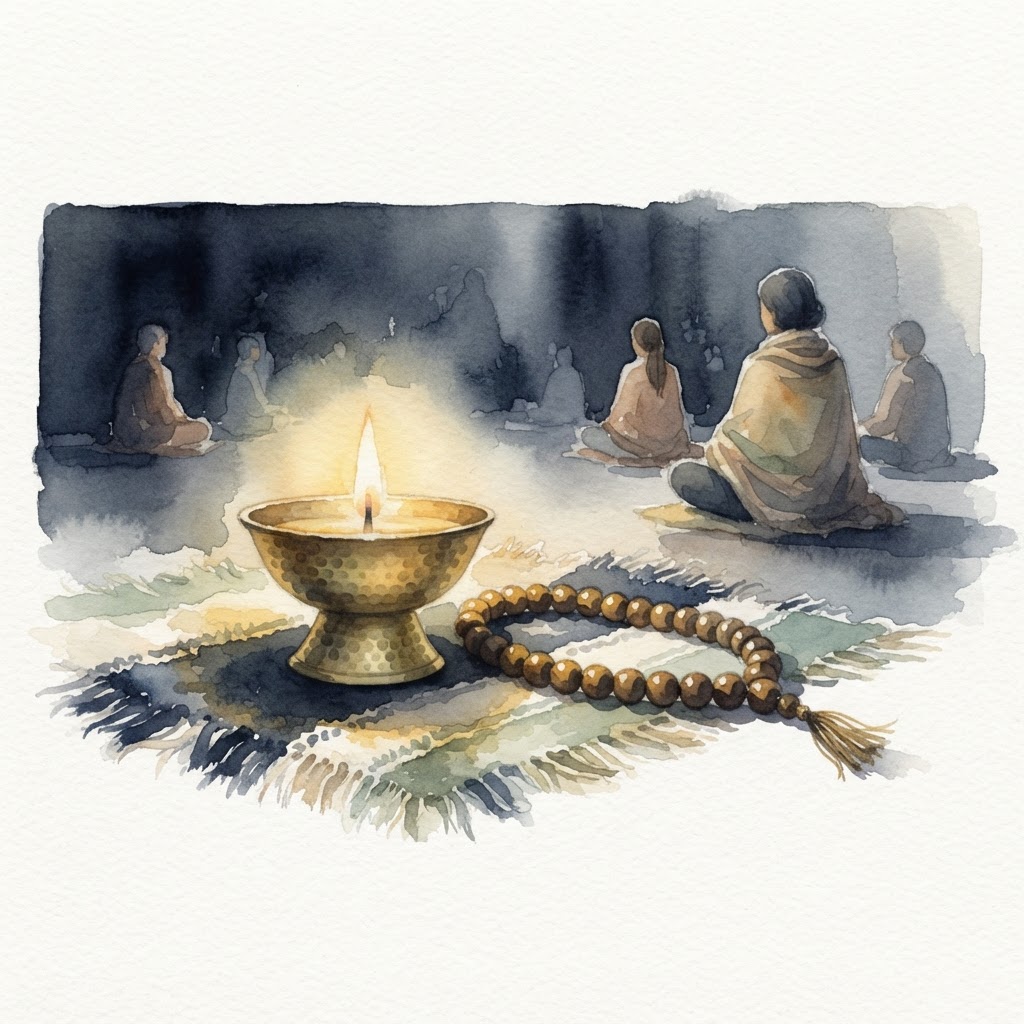
Who Is Amitabha, and Why Is Recitation Offered at the End of Life?
Amitabha (Tibetan: Öpame; Chinese: 阿弥陀佛, Āmítuófó) is the Buddha of Boundless Light and Boundless Life. In both Tibetan and Chinese Mahayana Buddhism, Amitabha is understood to have made vast compassionate aspirations to receive all beings — without exception — into his pure land, Dewachen (Sanskrit: Sukhavati), a realm of profound peace and clarity where the conditions for liberation are said to be perfect.
At the end of life, the mind is often described in Buddhist teachings as passing through a profound transition. Recitation of Amitabha's name or mantra is offered as a gentle anchor — something to hold the heart steady, to cultivate trust in the possibility of a good rebirth, and to surround a person with the energy of compassion and light.
This is not about fear or urgency. It is about kindness.
The Mantra and the Name
There are two recitations most commonly used:
- OM AMI DEWA HRIH — the Tibetan mantra of Amitabha, used in Vajrayana (Tantric) practice within the Nyingma and other Tibetan traditions.
- Namo Amitabha (南无阿弥陀佛) — the Chinese Pure Land recitation, meaning roughly 'homage to Amitabha Buddha', used across Chinese Buddhist communities worldwide.
Both carry the same aspiration: to call on Amitabha's compassion, to purify obstacles, and to support the dying person's mind toward peace and a good rebirth in Dewachen.
If your family comes from a Chinese Buddhist background, Namo Amitabha may feel most natural. If you practise in the Tibetan tradition, OM AMI DEWA HRIH is traditional. Either is offered with sincerity and a quiet mind.
How Families Can Offer This Practice Gently
If the dying person has expressed a wish for Buddhist practice, and the care environment allows it, family members can offer recitation in the following way:
- Ask permission first — from both the person (if conscious and able) and the ward or care team. Many hospitals in Australia now have spiritual care staff; you can ask the ward team about support through the Spiritual Health Association, which promotes spiritually inclusive healthcare.
- Keep the environment calm — dim lighting if possible, reduce noise, speak softly. Hearing is understood in Buddhist teaching to remain active even when a person is unresponsive.
- Recite quietly and steadily — you can recite aloud in a soft, even voice, or use a gentle recording if the care team agrees. There is no need to rush.
- Hold a pure intention — recite with love and the genuine wish for the person's peace and liberation, not from anxiety or grief. Your own calm is a gift.
- Rest between recitations — silence is also part of the practice. You do not need to fill every moment with sound.
- Continue for a short time after the breath stops if possible — in Tibetan Buddhist understanding, the consciousness may remain briefly. Keep the environment still and avoid loud disturbance.
You do not need to be an experienced practitioner to offer recitation with a loving heart. What matters most is sincerity.
A Note on Phowa and Other Advanced Practices
Phowa — the practice of consciousness transference at the moment of death — is a specialised Vajrayana practice that must only be performed by a qualified lama or practitioner with proper transmission and training, or under direct guidance from a qualified teacher. Attempting phowa without this preparation is not recommended and may cause confusion rather than benefit.
If your family is seeking this kind of support, please contact Tsewang Foundation to speak with someone who can offer guidance or connect you with an appropriate teacher.
Respecting the Person's Own Beliefs and Wishes
Not every person who is dying will want Buddhist recitation, even within a Buddhist family. Always follow the person's own expressed wishes. If they have not practised Buddhism, or if they follow a different faith or no faith, offer your love and presence in whatever way they welcome.
Buddhist practice is never imposed. It is offered, gently, when invited.
For broader guidance on how Buddhist families can prepare and be present at the end of life, see our companion article Buddhist End-of-Life Care in Melbourne: How Families Can Prepare and Be Present.
Monthly Amitabha Group Practice at Tsewang Foundation
Tsewang Foundation holds a monthly Amitabha group practice at our centre in Burwood East, Melbourne. This gathering is an opportunity to recite together, to build familiarity with the practice, and to cultivate the aspiration for Dewachen as part of an ongoing spiritual life — not only at the moment of death.
Practising regularly means that when a loved one is dying, the recitation comes naturally, from a settled and familiar place rather than from panic. See our events and practice times for current details.
Professional Support: Palliative Care and Spiritual Care in Australia
Buddhist practice supports the heart and spirit. It does not replace medical or palliative care, and Tsewang Foundation is not a medical or counselling service.
If your loved one is living with a life-limiting illness, palliative care can help them live as comfortably and fully as possible — at home, in hospital, in a hospice or in residential aged care. Talk to your GP or specialist about a referral. Healthdirect provides information about palliative care options across Australia.
For families who speak Chinese, Palliative Care Victoria provides information in Simplified and Traditional Chinese, as well as other languages.
Many Australian hospitals also have spiritual care staff who can support people of all faiths and none. Ask the ward team whether this is available.
If anyone is in immediate danger, call 000.
Frequently asked questions
Can I recite Amitabha's name next to a dying person in hospital?
Yes, in most cases family members can recite quietly near a dying person if the person wishes it and the hospital allows it — it is worth asking the ward team or spiritual care staff beforehand. Keep your voice gentle and the environment calm, as a peaceful atmosphere is considered beneficial in Buddhist understanding.
What is the difference between OM AMI DEWA HRIH and Namo Amitabha?
OM AMI DEWA HRIH is the Tibetan Vajrayana mantra of Amitabha Buddha, used in Tibetan Buddhist traditions including the Nyingma school. Namo Amitabha (南无阿弥陀佛) is the Chinese Pure Land recitation meaning 'homage to Amitabha Buddha'; both carry the same aspiration for the person to be received into Dewachen, the pure land of Amitabha.
What is Dewachen (Sukhavati) in Tibetan Buddhism?
Dewachen, known in Sanskrit as Sukhavati, is described in Mahayana Buddhist teachings as a pure land — a realm of great peace, clarity and beauty presided over by Amitabha Buddha, where the conditions for awakening and liberation are said to be perfect. Aspiring to rebirth there is a central practice in both Tibetan and Chinese Pure Land Buddhism.
About Tsewang Foundation
Tsewang Foundation was founded in 2023 by Chagkhung Khenpo Tsewang Rinpoche and is registered in Australia. Rooted in the Nyingma tradition of Tibetan Buddhism and the Dzogchen lineage of H.H. Jigme Phuntsok, it works to support community wellbeing through the Buddha's wisdom and compassion. The Foundation holds public Buddhist practice and meditation sessions at its centre in Burwood East, Melbourne (5-7 Sevenoaks Rd, Burwood East VIC 3151); please check the Events page for times and how to join, and see About us for Rinpoche and the lineage.
Where this applies
Australia (support services focus on Victoria)
Official and original sources
- Spiritual Health Association — checked 12 November 2026
- healthdirect – Palliative care — checked 12 November 2026
- Palliative Care Victoria – 什么是舒缓治疗(简体中文) — checked 12 November 2026
Last updated: 12 November 2026
Related content
- Buddhist End-of-Life Care in Melbourne: How Families Can Prepare and Be Present
- Exhausted from Caring for a Dying Loved One? Mahayana Compassion and Caring for Yourself
- Carer Support and Respite in Australia: Caring for Yourself Too
- What to Do When Someone Dies in Victoria: A Guide for Buddhist Families
- Fear of Death: How Buddhist Teachings Can Bring Peace
- Advance Care Planning for Buddhists: Recording Your End-of-Life Wishes in Victoria
- Spiritual Care in Australian Hospitals: What Buddhist Patients and Families Can Ask For
- How to Talk with a Dying Loved One: A Gentle Buddhist Guide
- Home Palliative Care in Melbourne: Preparing to Care for a Loved One at Home
- Buddhist End-of-Life Care in Melbourne: How Families Can Prepare and Be Present
- Tsewang Foundation public events and practice times
- Contact Tsewang Foundation in Burwood East