Puja
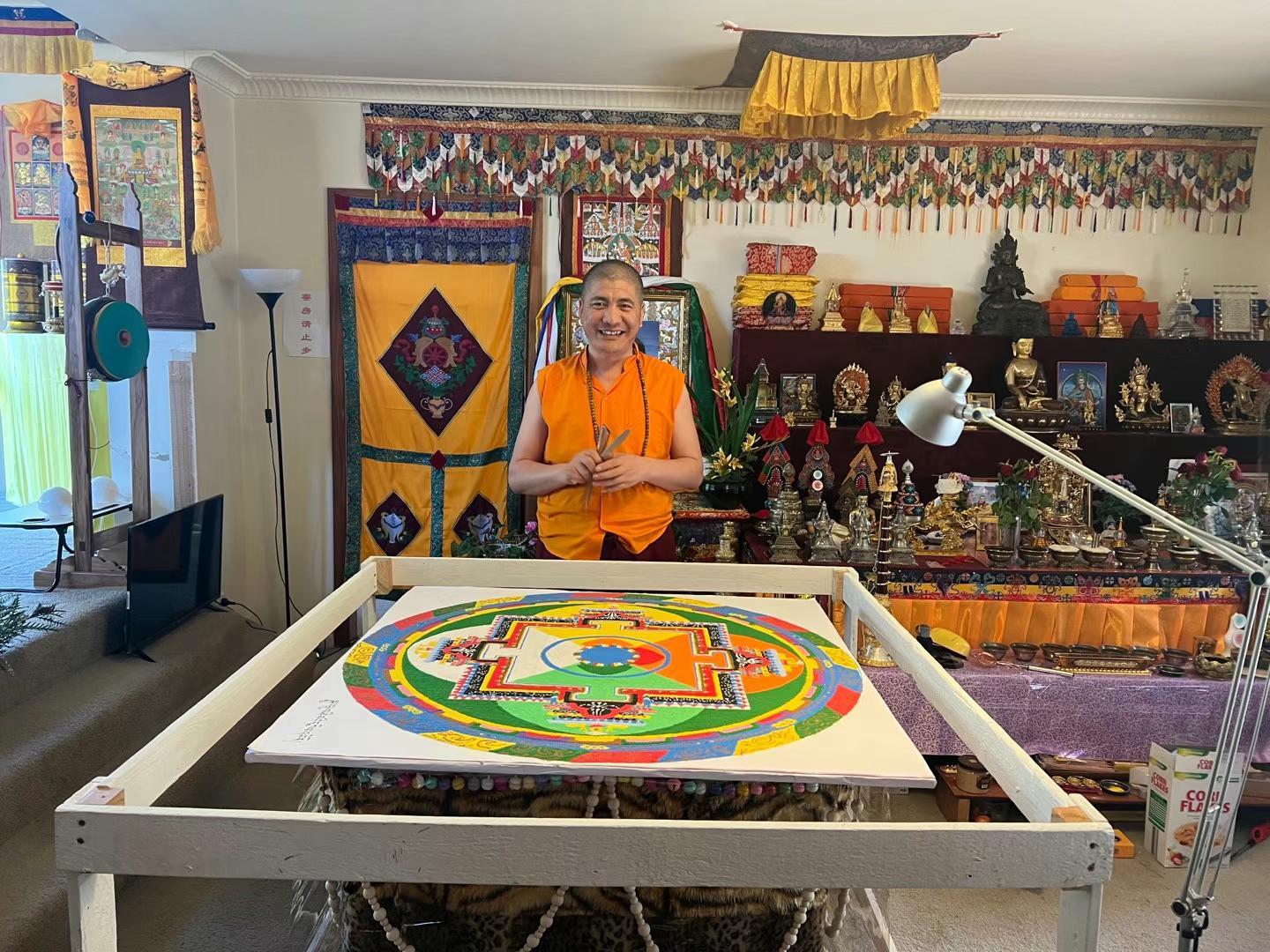
Sand Mandala
A sacred practice of purification, blessing and the contemplation of impermanence
The contemplation of a mandala is thought to enable spiritual awakening and psychological and emotional growth and, in Tibetan Buddhism especially, is believed to quicken one’s realization of the nature of the world and speed the process of enlightenment. The philosophy of the sand mandala makes seeing one in reality a profound experience of the structure of the universe, of wisdom and impermanence, and of the nature of enlightenment.
The mandala represents the human journey from ignorance to Buddhahood. After the mandala is completed and the accompanying ceremonies and public viewing are over, it is dissolved in one swift sweep. This represents the ultimate impermanence of all conditioned things. The sand is then poured into a river, where it is believed that the waters will carry the blessed sand far and wide.
For the beginner, the mandala serves as an object of meditation to develop mental stability and clarity and to reduce anxiety, frustration, worry and stress. It is a method to remind us to live in the present moment. For the artist, the mandala is an ancient Tibetan art with a unique history, meaning and purpose that reflect the value of our life and remind us to live happily and let others live happily too. The mandala is also used to purify and bless people and the world from negative forces and to bring harmony and peace. It reminds us of the importance of educating the heart, becoming a warm-hearted human being, and so reducing the man-made problems that come from selfish, narrow-minded and greedy attitudes.
Liberation through hearing: mantra of the Hundred Peaceful and Wrathful Deities
Over the course of one month, the two coloured-sand mandalas of the peaceful and wrathful deities of the Magical Illusion were constructed and auspiciously completed.
ཨོཾ་ཨཱཿ ཧཱུྃ།།
Oṃ āḥ hūṃ
ཀུན་བཟང་ཆེ་མཆོག་ཞི་ཁྲོའི་ལྷ་ཚོགས་དངཿ
To Samantabhadra, Chemchok and the assembly of peaceful and wrathful deities,
དམ་པ་རིགས་བརྒྱ་འདུས་པའི་ལྷ་ཚོགས་ལཿ
to the assembly of deities that gathers the hundred sacred families,
གུས་པས་ཕྱག་འཚལ་བར་དོར་གྲོལ་ནས་ཀྱངཿ
I respectfully pay homage. Liberated in the bardo,
འགྲོ་གུན་སྐུ་གསུམ་དོན་ལ་གནས་གྱུར་ཅིགཿ
may all beings abide in the meaning of the three kāyas.
ཨོཾ་ཨཱཿ ཧཱོུཾཿ བོ་དྷི་ཙིཏྟ་མ་ཧཱ་སུ་ཁ་ཛྙཱ་ན་དྷརྟུ་ཨཱཿ ཨོཾ་རུ་ལུ་རུ་ལུ་ཧཱོུཾ་བྷྱོ་ཧཱོུཾཿ
Oṃ āḥ hūṃ bodhicitta mahāsukha jñānadhātu āḥ oṃ rulu rulu hūṃ bhyo hūṃ